
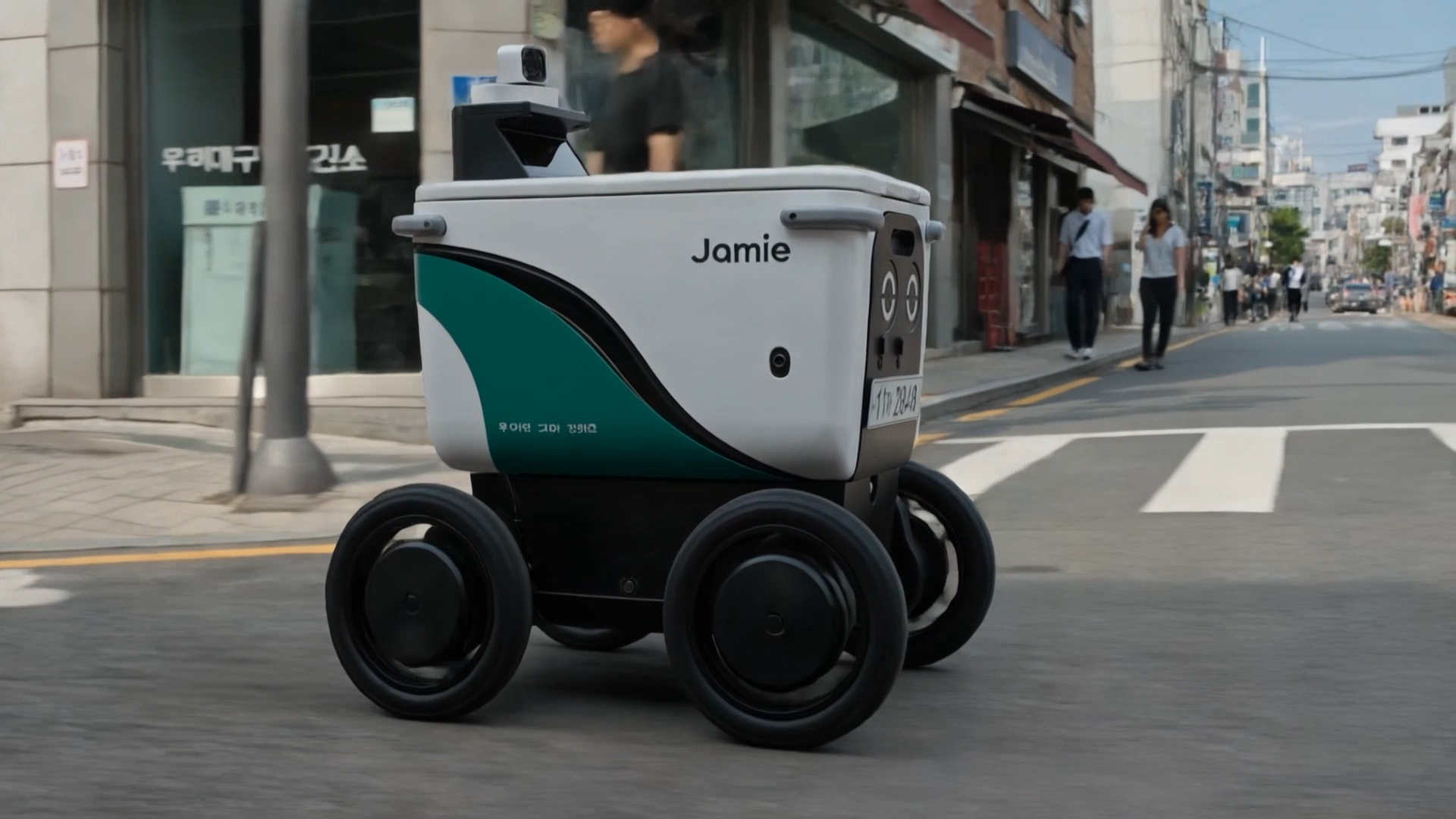
With World ID, peaq is helping ensure robots and machines make deliveries to the intended recipient while not revealing any personal information.
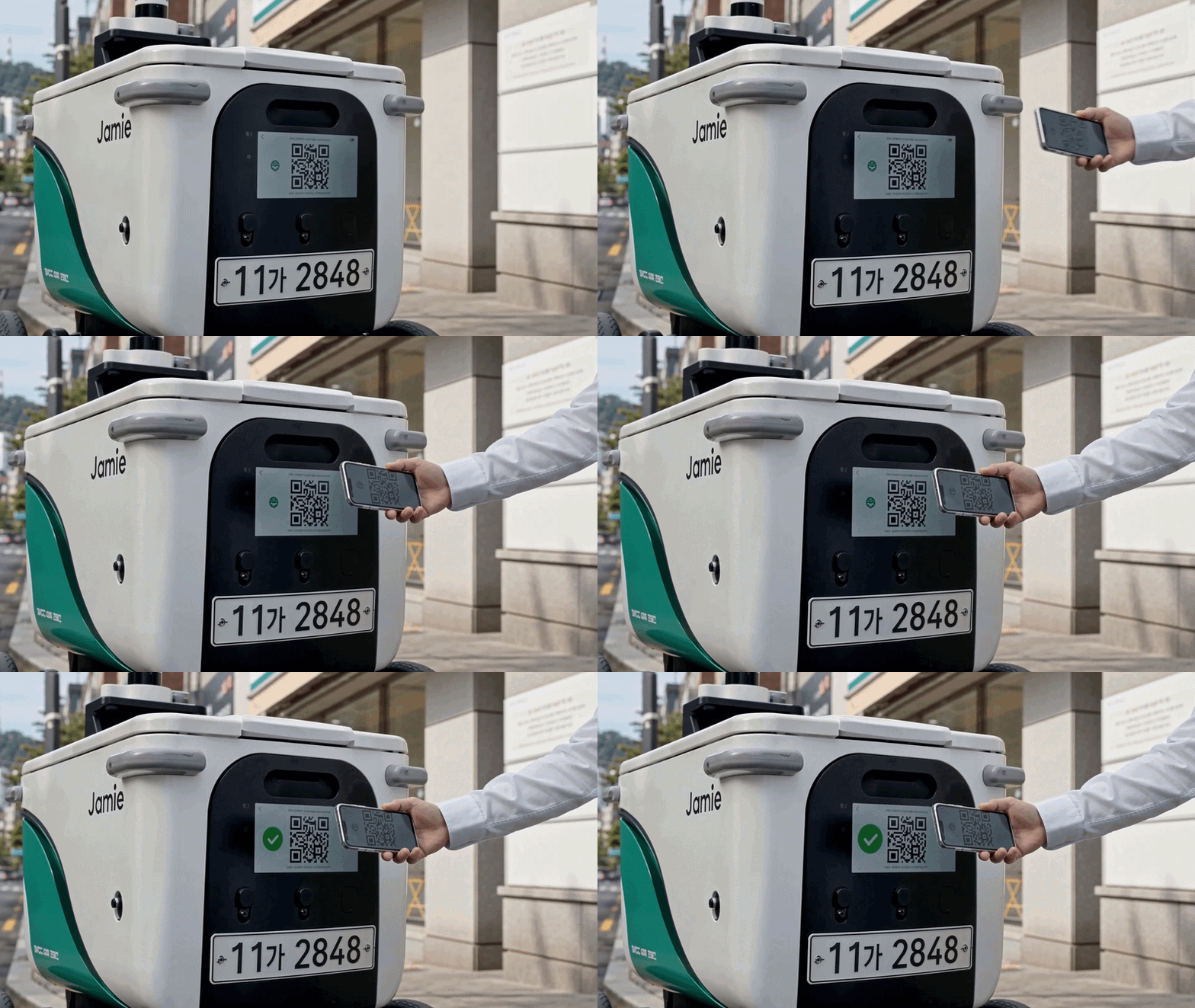
In a demonstration of how this could work, a delivery robot pulls up to a door in Seoul, and inside its locked compartment is a prescription. Before the compartment opens, the robot asks one question: is the person receiving the delivery the intended recipient?
The person verifies with their World ID that they are the intended recipient and a moment later the robot opens its compartment and hands over the order.
This demonstration illustrates the first of its kind: Proof of Human, native to the Machine Economy and physical AI. It's live on robotic.sh today.
How it works
peaq builds the economic layer for machines. Its operating system, peaqOS, runs on robots, vehicles, and devices across dozens of industries. Every machine on the network has its own verifiable machine ID. Until now, the network lacked the other half of the exchange: a way for a machine to know it was dealing with a real human.
Now it has one. peaq has integrated World ID directly into peaqOS. Any machine running the system can request a World ID credential natively, through peaq's Machine Market and its robotic.sh coordination layer.
The flow is simple: 1) The machine asks for verification. 2) The person confirms via their World ID. 3) World ID returns a zero-knowledge proof: cryptographic, anonymous evidence that this is a real, unique human, and the same human tied to the order. The machine gets a yes or a no.
peaq sums it up in six words: real human, right human, nothing else revealed.
More than deliveries
Delivery is the obvious first use case, but peaq points to two others that follow the same logic. Picture a promotional robot handing out samples at a conference. It needs to give one to each person and no more, and the usual way to enforce that is to ask for a name or an email. With World ID, the robot can confirm it is dealing with a real human who hasn't already collected one, and it can do that without knowing or storing sensitive personal data. The same holds for rental equipment. A scooter, a locker, a shared tool on a job site: any of them can unlock for a verified human on the spot, with no form to fill out and no personal profile sitting on a server afterward.
The larger idea is a bridge. On one side, a growing world of autonomous machines. On the other, nearly 18 million verified humans across 160 countries. World ID lets the two sides meet with trust, and with privacy intact.
The beginning
This is a demo and the medication delivery in Seoul is an example of how the technology can be used. It is open for builders everywhere to explore what’s possible. Robots running peaqOS can ask for Proof of Human today. Any of the millions of people who carry a World ID can answer.
World's mission is to ensure every human benefits from the age of AI. That has always meant protecting what is human online. It is starting to mean protecting it everywhere else, too. When a robot knocks, you should be able to prove you are the person it came for, and prove nothing else. To learn more about World ID, visit world.org/world-id.
เข้าร่วมเครือข่ายมนุษย์จริง
ดาวน์โหลดแอป World IDบทความที่เกี่ยวข้อง
Announcements ·
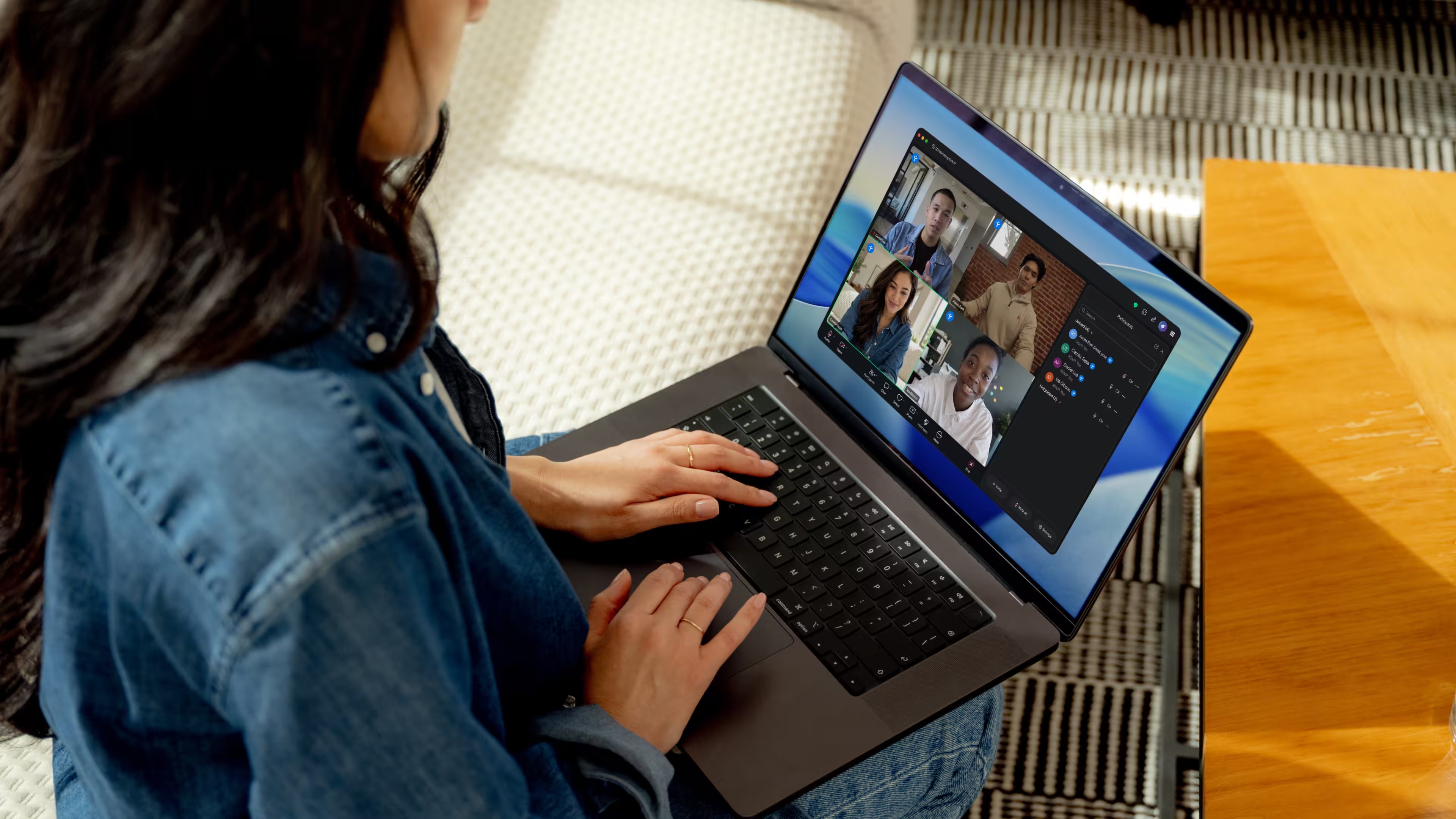
World ID for Zoom: Proof of Human technology for trusted video communications
Announcements ·
Introducing World ID for banking and finance: AI-safe experiences for enterprises and their customers

Announcements ·
Muse, dots, Instinct, and the question every agent will be asked
Announcements ·